
A Travel Letter: The Road to Cannes
CANNES / GOTHENBURG, May 26, 2026
For many people in the film industry, the month of May is inseparable from the Cannes Film Festival. For me, it used to come with a feeling of total FOMO.
When I was studying to become a producer, we were taught early on that the festival was a place you simply had to go, with our flights and accommodation both paid for.
Flying there, of course, comes with an environmental cost: roughly half a tonne of CO2e per person. But as with most things, there are alternatives, and it is precisely those alternatives that this travel letter is about.
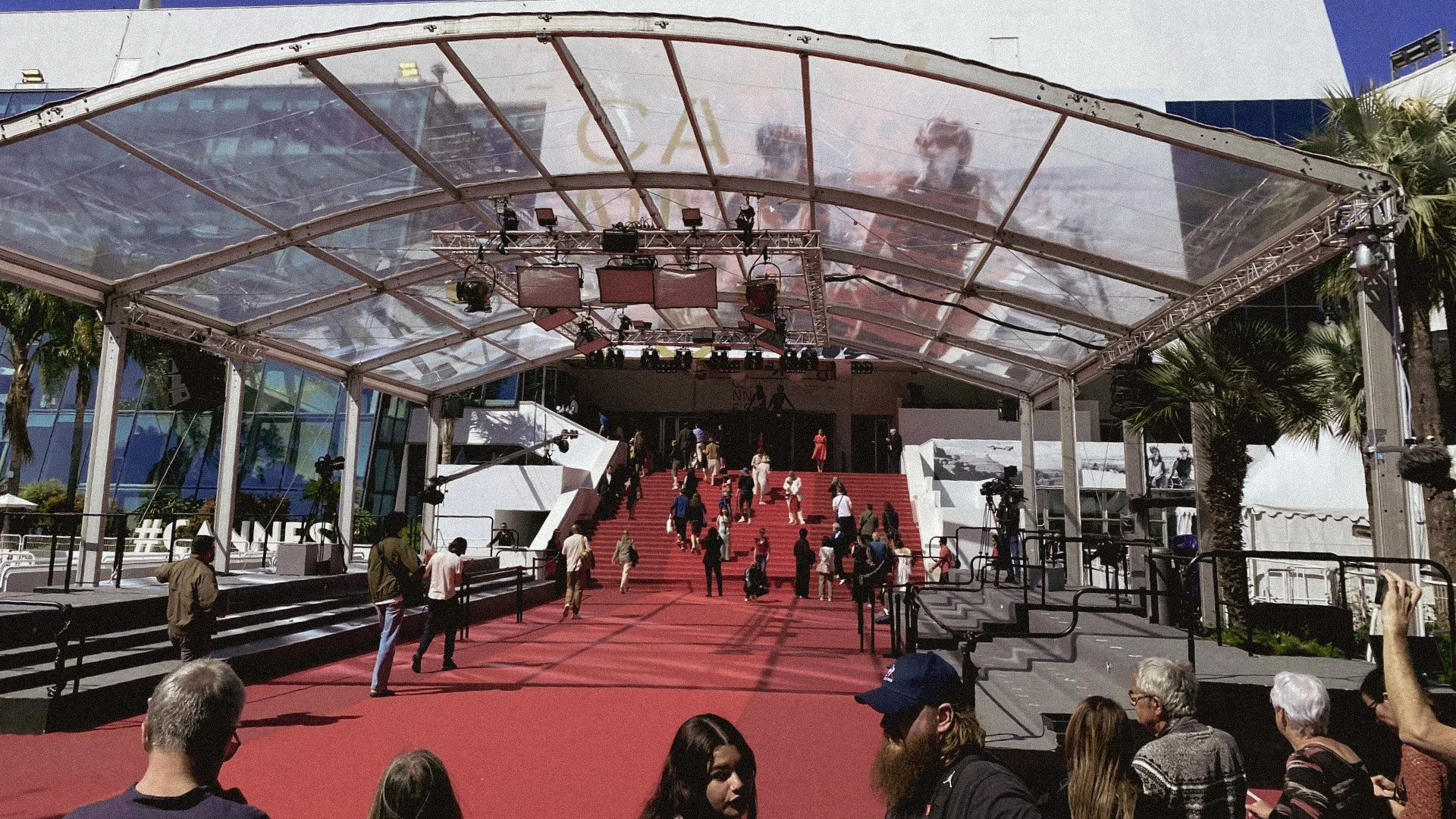
Les 24 Marches of the Palais des Festivals in Cannes
As a film producer, I understand the value of being there. It is expected of us, and you have to play by the rules of the game. Even if I am not especially fond of cocktail mingling, oysters, or French fries (and let’s face it, vegan options are rarely in abundance).
In recent years, when traveling to piece together financing for film projects, I have gone by train. It adds an extra day or so, but that can be a good thing. It gives you time to prepare for meetings and align with your closest colleagues.
This year, however, we tried something new.
Every year, the Global Production Awards honor outstanding achievements behind the camera. This year, the Swedish-Norwegian-Finnish co-production Kevlarsjäl (Kevlar Soul), which I produced, was shortlisted for the Sustainable Production Award for our comprehensive environmental and structural work behind the camera.
Read the Kevlar Soul Case Study - written by Kaisa Astikainen
At the same time, the Nordic Ecological Standard (NES) was nominated in the Sustainability Initiative category. Both I and Patrik Axén , who has led the NES project, had a very good reason to be there.
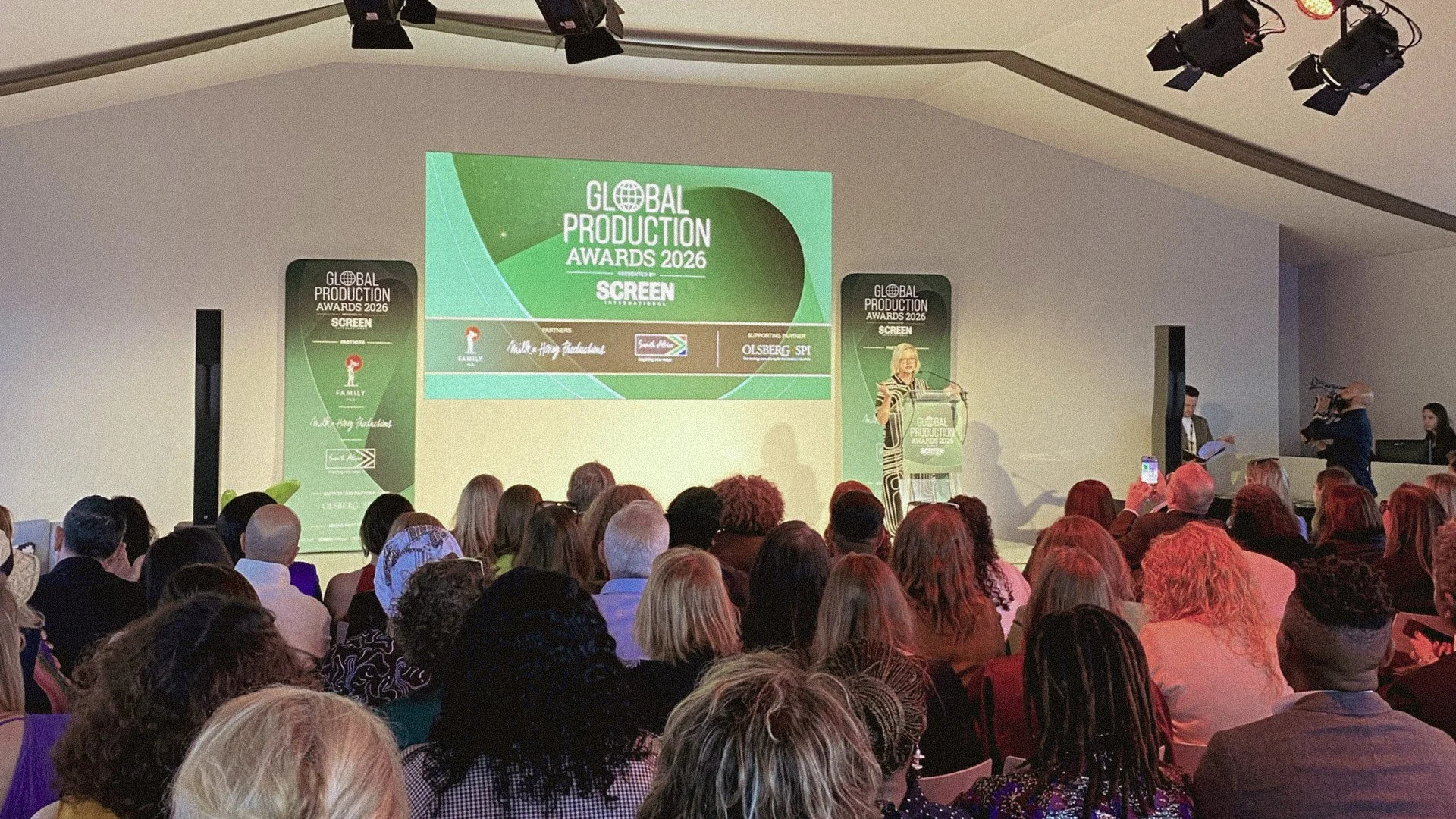
The Global Production Awards
To make the absolute most of the trip, I had a packed schedule: I booked as many meetings as I could in the service of the environment, took part in a panel discussion about NES arranged by the Nordic Film Commission, and joined a roundtable hosted by Creative Europe MEDIA, where we, GPC as grant recipients, shared experiences, challenges and possible synergies with others who have received project support.
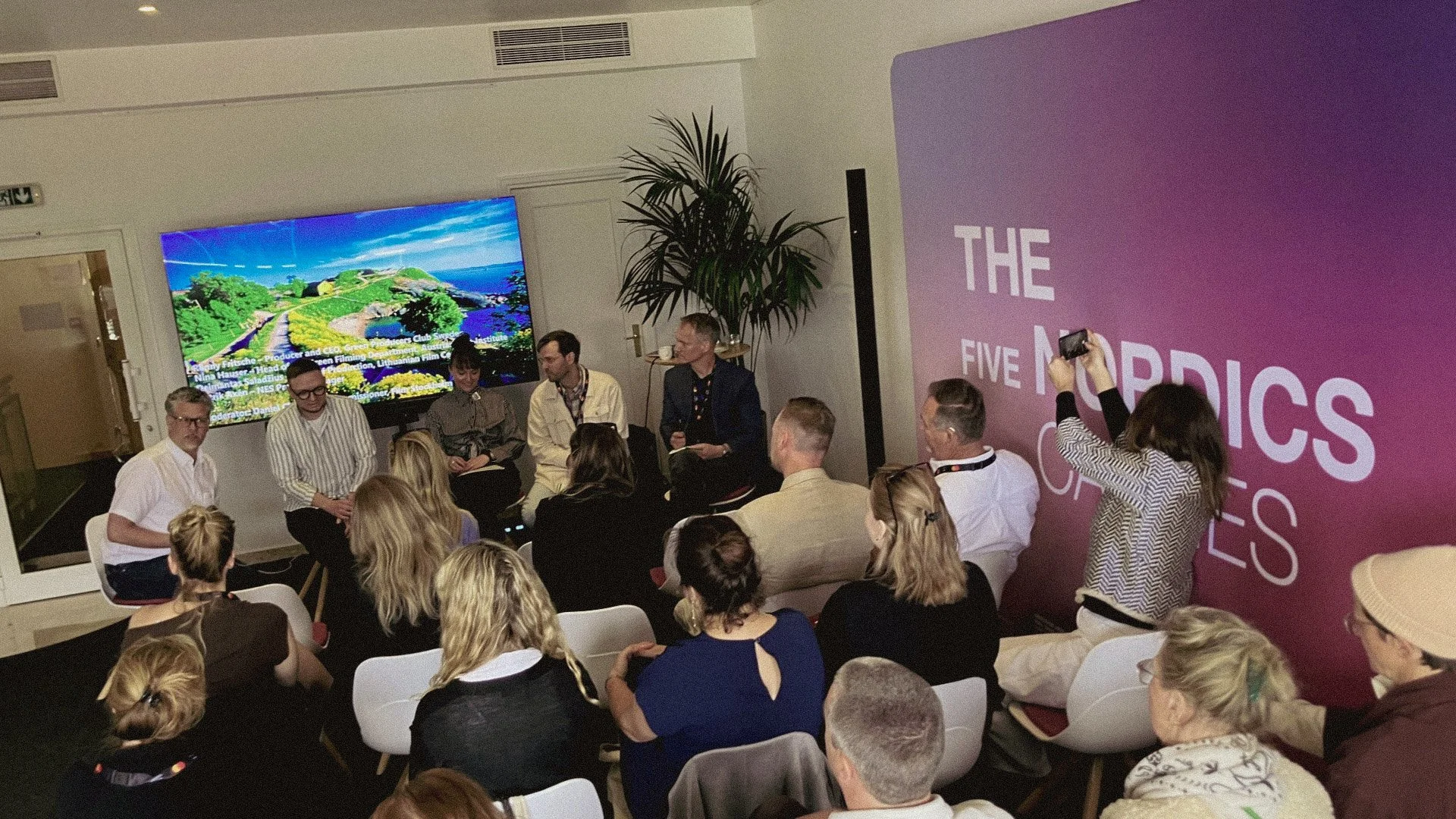
Panel discussion about the Nordic Ecological Standard (NES)
When the chance arose to make the trip by electric car through Green Producers Club’s brand-new partnership with Hyre, it felt like the perfect experiment. I saw an opportunity to find out for myself how well the European charging infrastructure actually works, and either confirm or kill off the classic myths: app inflation, charging trouble, and range anxiety.
The Road to Cannes
The journey began in Copenhagen on the 13th of May, where we picked up a fully charged Volkswagen ID.4 through the Hyre app. We rolled towards Rødby to take the ferry to Germany, saving us time behind the wheel, even if it added a short ferry crossing to our total CO2 calculation.
We continued through Germany via Hamburg and Kassel, checking into a budget hostel in Neu-Ulm that evening. The bonus? They had a slow overnight charger. We woke up the next morning, quite literally, with 100% new energy.
Next came the most beautiful stretch of the journey: driving through the Alps, through Austria (I think our tires may have brushed Liechtenstein), and into Switzerland. We stopped for some (not-so-cheap) vegan ramen in Lugano, explored romantic cobbled streets, and then pushed onward to Italy for a quick double espresso in Milan.
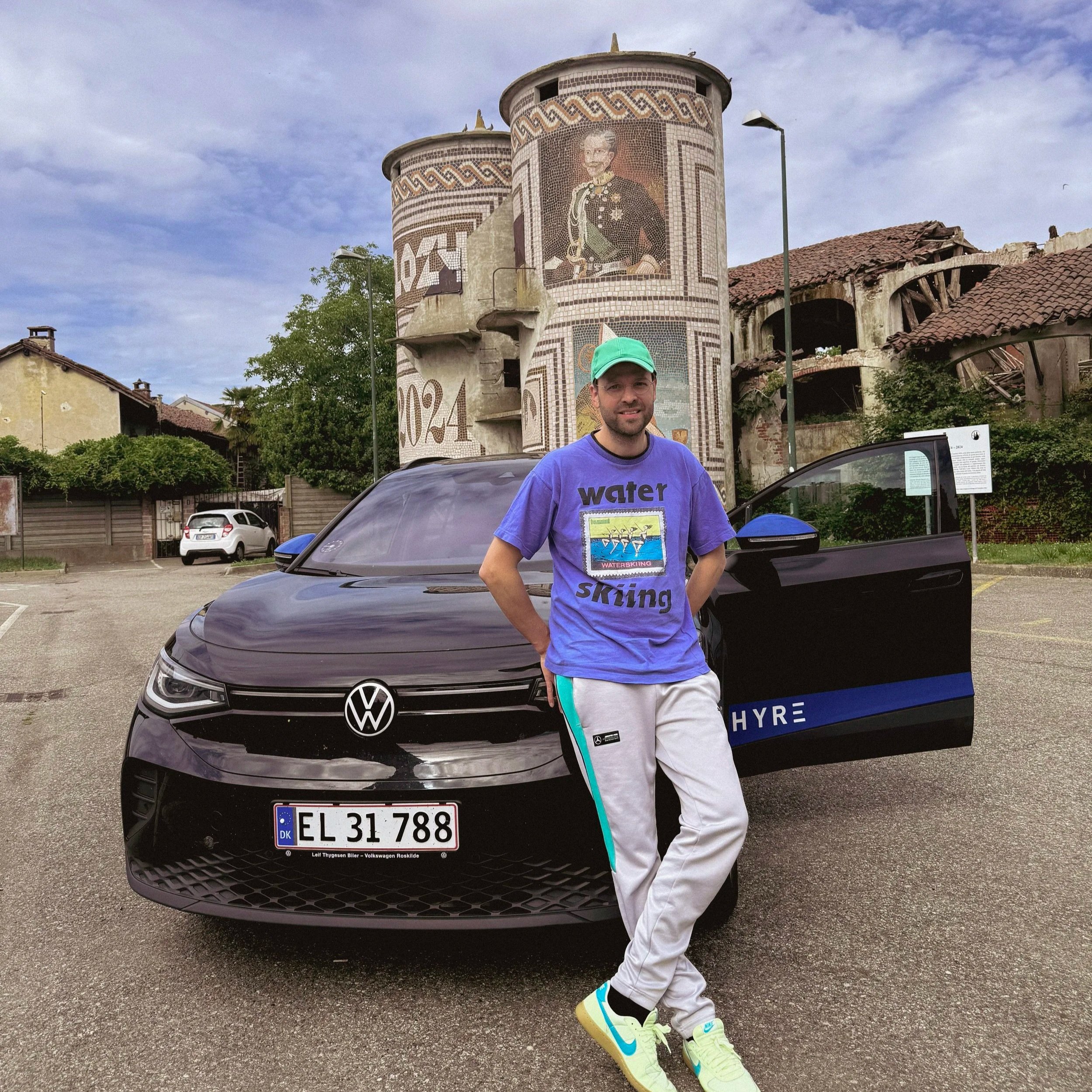
On the final stretch, traffic from a tunnel accident delayed us, but we consoled ourselves with a beautiful view from a standstill bridge, finally rolling into Cannes around midnight on the 14th.
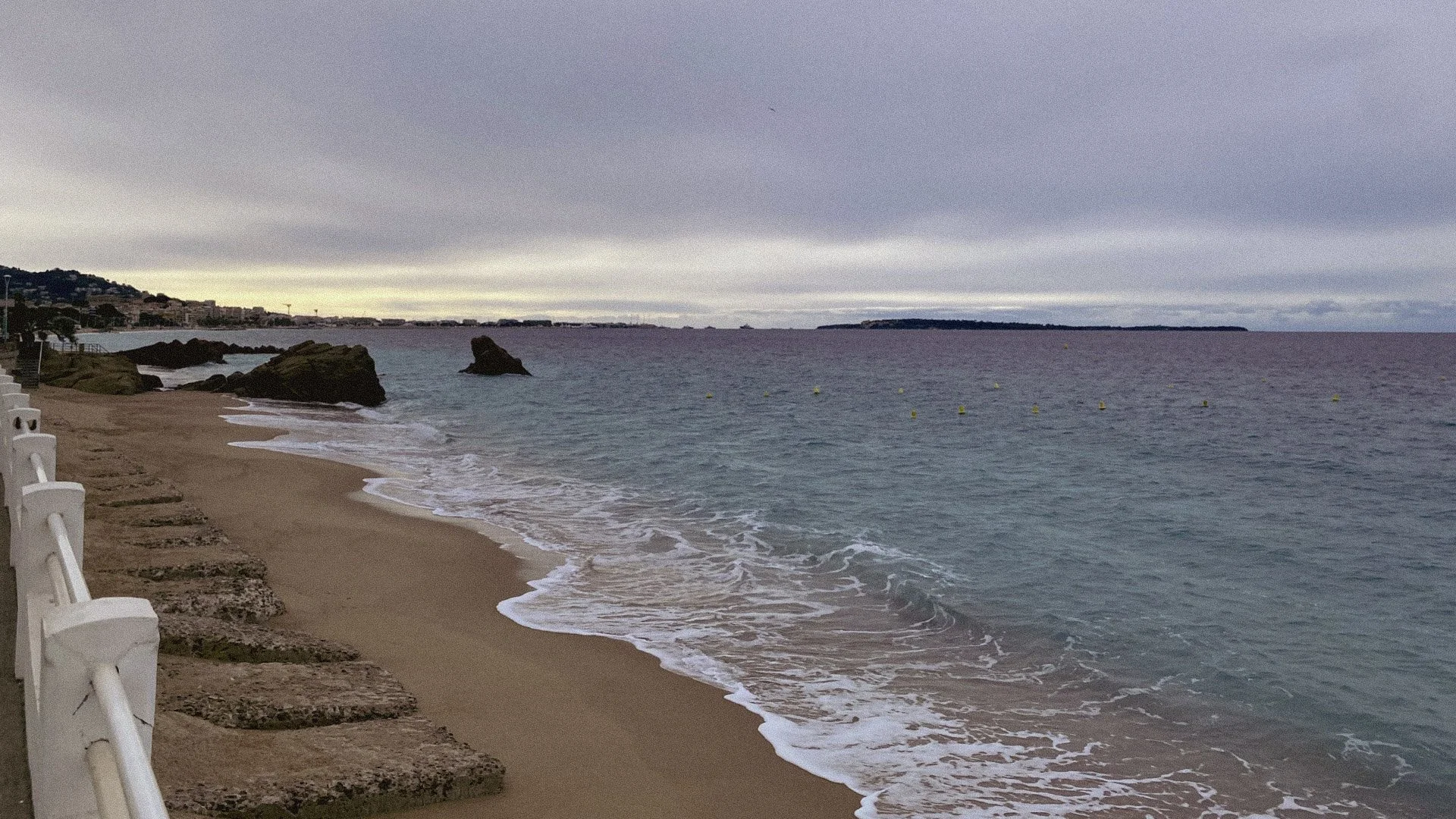
We arrived in beautiful Cannes!
So, how did the fast-charging actually go?
In short: incredibly well. The car can go further than we can bear to drive in one stretch (which is usually around three hours for me). Range anxiety never appeared because chargers are everywhere. We stuck exclusively to Ionity stations to avoid a jungle of different apps, and their platform states that 100% of the electricity used is fossil-free.
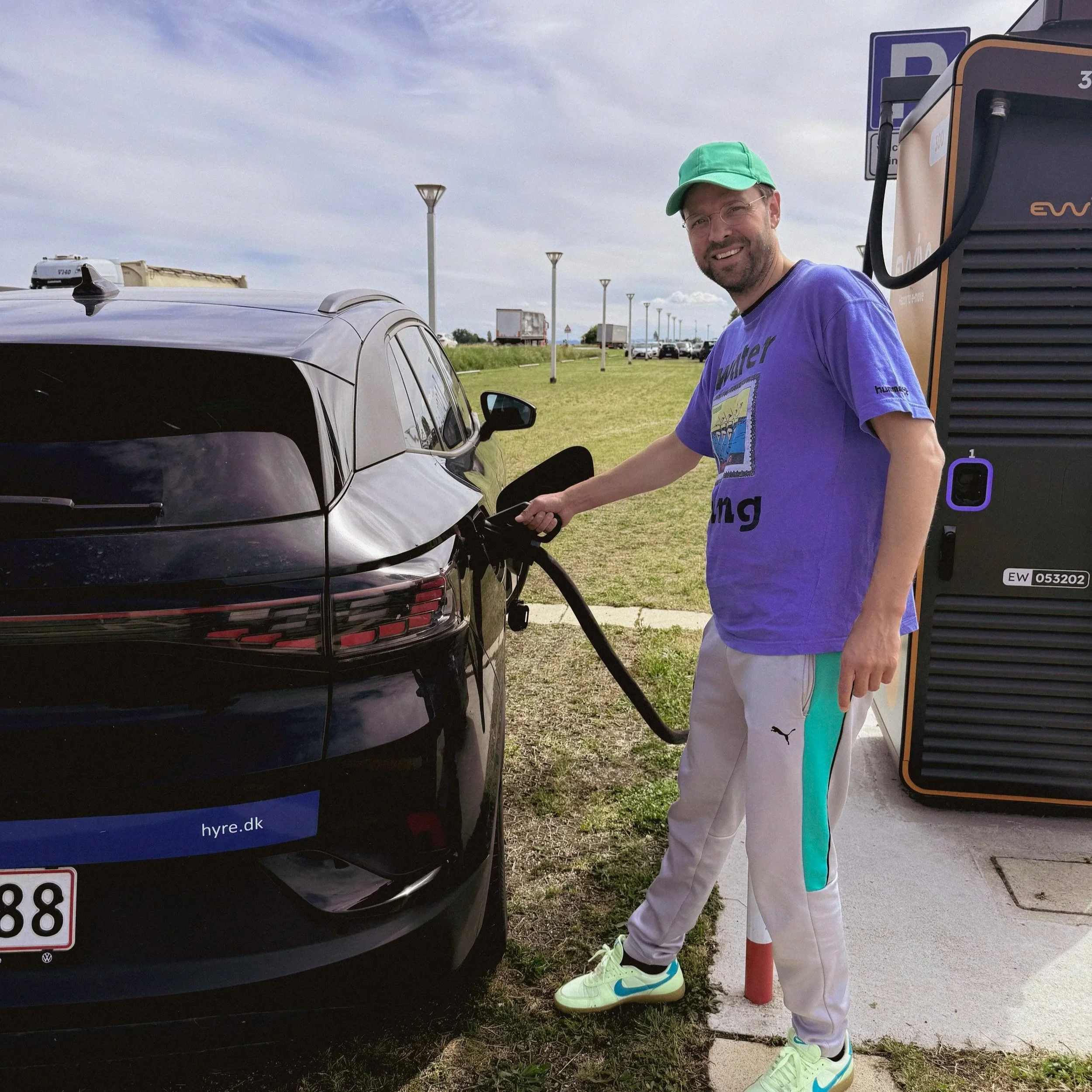
The data breakdown:
Cost: €0.42 (approx. 4.50 SEK) per kWh.
Average Stop: Around 60 kWh costing about €25 (approx. 273 SEK).
Time: A charging stop takes a mere 20 to 30 minutes.
Consumption: Over 10 km, the car uses about 2 kWh, which comes to roughly 9 SEK.
We only had to try alternative chargers a few times. Once we gave up and drove on, but the other times a few button presses and a tap of the card got the machinery going smoothly.
Final Thoughts
Once in Cannes, Kevlarsjäl had to accept a respectful defeat to Jurassic World: Rebirth at the awards gala, meaning what I had planned to say in my acceptance speech will remain a secret!
But I was deeply moved to see NES take home the win for Sustainability Initiative. It was a well-deserved victory for the Nordic region and all the organisations behind the standard.
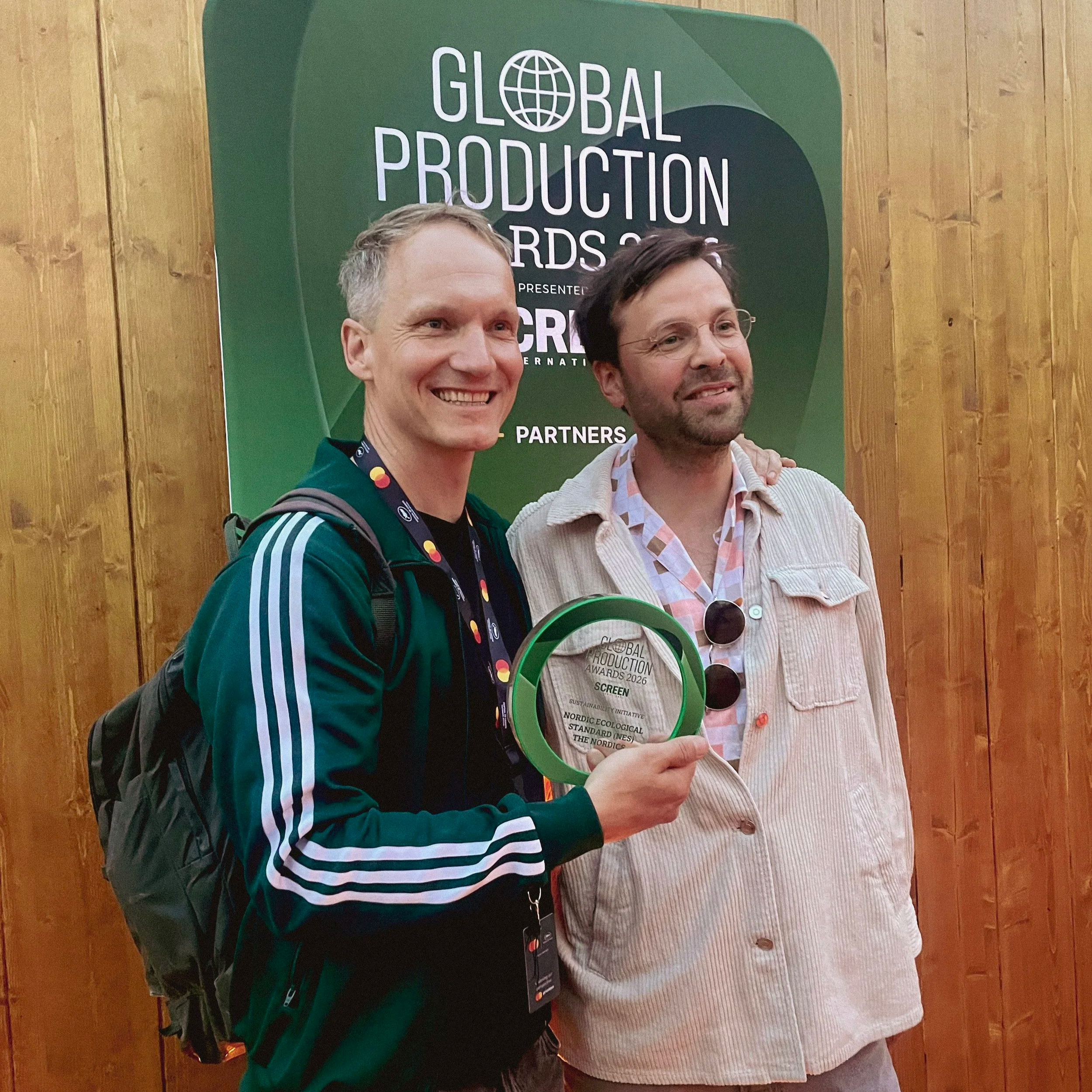
Patrik Axén (Swedish Film Institute) and Ronny Fritsche at the Global Production Awards
I am writing the final lines of this letter on the Autobahn on our way home. When I was a child, we often drove this same route to visit relatives. I used to stare at the windshield as it grew speckled with insects, weirdly amused watching a large crane fly or a bumblebee hitch a ride on the wiper.
What strikes me now is that the windshield massacre never came. Where have all the insects gone?
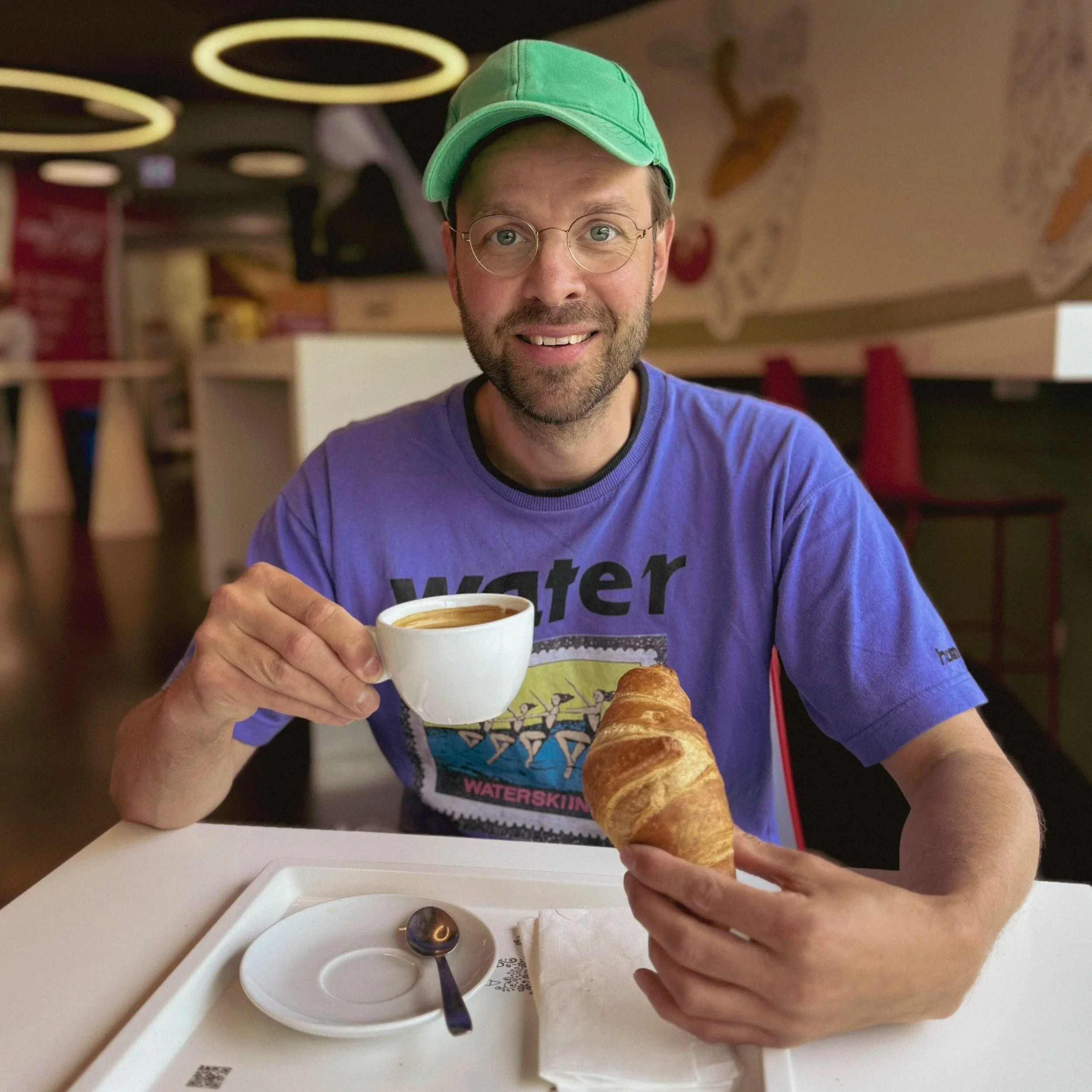
It’s time to stop for a morning coffee. The journey for two people by car has produced 584 kg of emissions from Copenhagen to Cannes and back. Flying from Sweden would have produced roughly 1,030 kg for the two of us, with one person flying from Stockholm and one from Gothenburg, our respective hometowns.
Who wants to come along in the car next time? Then we can split the car’s emissions between even more passengers.
Country Manager, Green Producers Club Sweden
